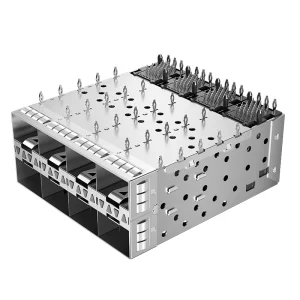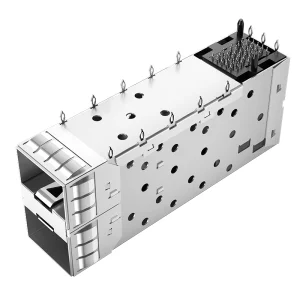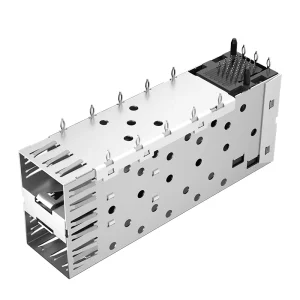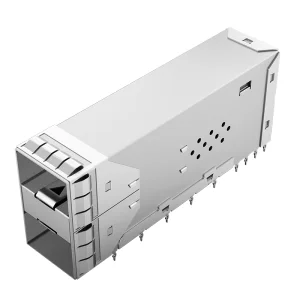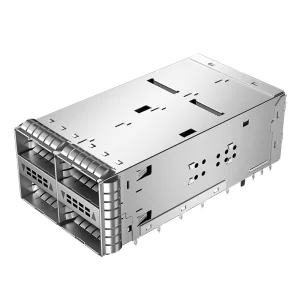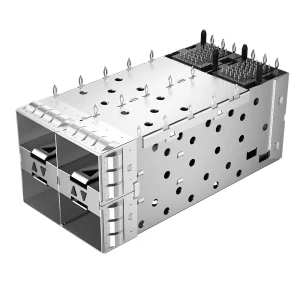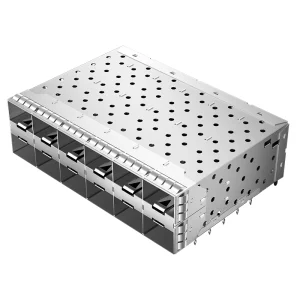
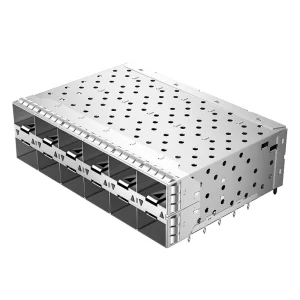
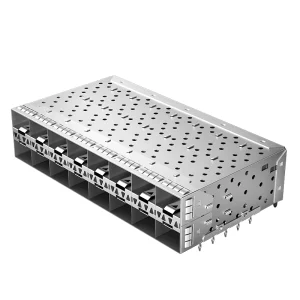
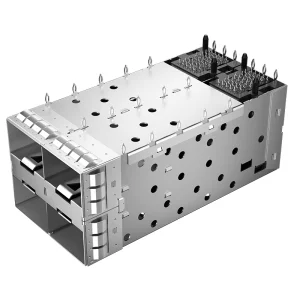
SFP Cage 2xN (Stacked Ports) Production & Technical Specification

Comprehensive Technical Whitepaper on Multi-Port Stacked SFP+/SFP28 Interconnect Architecture and Industrial OEM/ODM Manufacturing Capabilities

Featured High-Speed 2xN Stacked SFP+ & SFP28 Cages

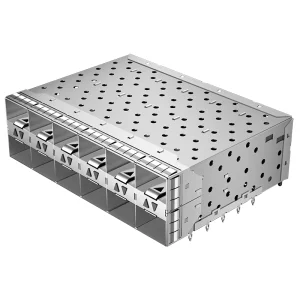
TE Compatible 240P 2x6 Ports Press-Fit SFP+ Cage With Integrated Connector

1-2007562-8 TE Compatible 240P 2x6 Ports Press-Fit SFP+ Cage With Integrated Connector

View Details & Specifications
TE Replacement 240P 2x6 Ports Light Pipe Press-Fit SFP+ Cage With Integrated Connector

2180640-1 TE Replacement 240P 2x6 Ports Light Pipe Press-Fit SFP+ Cage With Integrated Connector

View Details & Specifications
TE Compatible 2347721-8 SFP28 Cage 240P Stacked 2x6 Ports Press Fit ZSFP+ Cage With Light Pipe

TE Compatible 2347721-8 SFP28 Cage 240P Stacked 2x6 Ports Press Fit ZSFP+ Cage With Light Pipe

View Details & Specifications
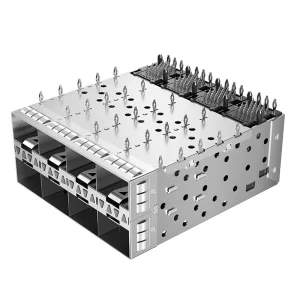
TE Compatible Through Hole 160P 2x4 Ports Press Fit SFP+ Cage With Integrated Connector

2007394-6 TE Compatible Through Hole 160P 2x4 Ports Press Fit SFP+ Cage With Integrated Connector

View Details & Specifications
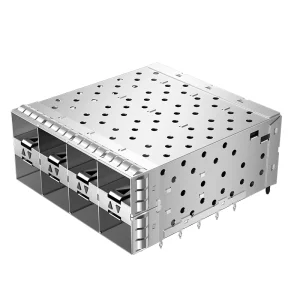
SFPP-3120-L Pulse Compatible 160P Stacked 2x4 Ports Press Fit SFP+ Cage With Light Pipe

SFPP-3120-L Pulse Compatible 160P Stacked 2x4 Ports Press Fit SFP+ Cage With Light Pipe

View Details & Specifications
Pulse Compatible 40P Stacked 2x1 Ports Press Fit SFP Cage With Integrated Connector

SFP013-L Pulse Compatible 40P Stacked 2x1 Ports Press Fit SFP Cage With Integrated Connector

View Details & Specifications
TE Replacement Through Hole 320P 2x8 Ports Press-Fit SFP+ Cage With Light Pipe

2169788-1 TE Replacement Through Hole 320P 2x8 Ports Press-Fit SFP+ Cage With Light Pipe

View Details & Specifications
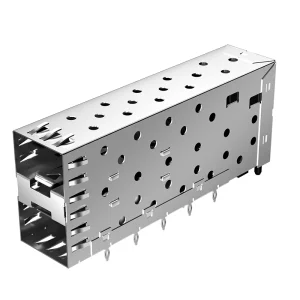
TE Replacement Through Hole 80P 2x2 Ports Press-Fit SFP+ Cage With Integrated Connector

2007417-8 TE Replacement Through Hole 80P 2x2 Ports Press-Fit SFP+ Cage With Integrated Connector

View Details & Specifications

SFP Cage 2xN Design Parameters & Structural Optimization

In modern optical networking, maximizing port density is crucial. The 2xN stacked configuration represents the state-of-the-art solution for high-density architectures. By doubling the vertical port capacity in a single card slot footprint, network designers can optimize space and efficiency. Stacked configurations like 2x1, 2x2, 2x4, 2x6, and 2x8 require precise physical engineering to manage the signal integrity and thermal load associated with higher performance.

"The physical geometry of a 2xN stacked cage requires a balance between mechanical strength, electromagnetic containment, and thermal dissipation. Integrating high-speed connectors directly into the cage assembly minimizes signal loss at the board level while maximizing assembly speed."

To maintain reliable connections at speeds ranging from 10 Gbps (SFP+) up to 28 Gbps per channel (SFP28), the high-density contact configuration must incorporate specialized design parameters:

  • Press-Fit (Compliant Pin) Termination: By utilizing elastomeric, cold-welded compliant pins, press-fit assemblies prevent signal degradation from wave soldering. They also ease rework and assembly on multi-layer PCBs.
  • Integrated Multi-Port Connectors: By pre-aligning the card-edge receptacles inside the cage, insertion tolerances are reduced, ensuring consistent contact force and minimizing impedance mismatch.
  • Advanced EMI Shielding: Dense arrays of high-frequency channels generate significant electromagnetic radiation. 2xN cages incorporate metal spring fingers and conductive elastomeric gaskets to prevent emissions leaking from the faceplate interface.

High-Speed Signal Integrity

Stacked 2xN architectures use complex internal routing and shielding paths to reduce near-end crosstalk (NEXT) and far-end crosstalk (FEXT). This configuration supports transmission rates up to SFP28 (28Gbps NRZ) and SFP56 (56Gbps PAM4) without signal degradation.

Advanced EMI Mitigation

To meet FCC and CISPR limits, our 2xN cages incorporate 360-degree EMI spring fingers and conductive elastomer gaskets. These features maintain continuous ground path connection to the bezel and chassis frame, minimizing high-frequency radiation.

Enhanced Thermal Flow

Stacking modules vertically restricts airflow across the top and bottom rows. To manage heat, our cages feature custom airflow vents, optional integrated heatsinks, and optimized lightpipe pathways that redirect air to high-temperature optical transceivers.

FiberNova: Advanced Industrial Manufacturing Facilities & Expertise

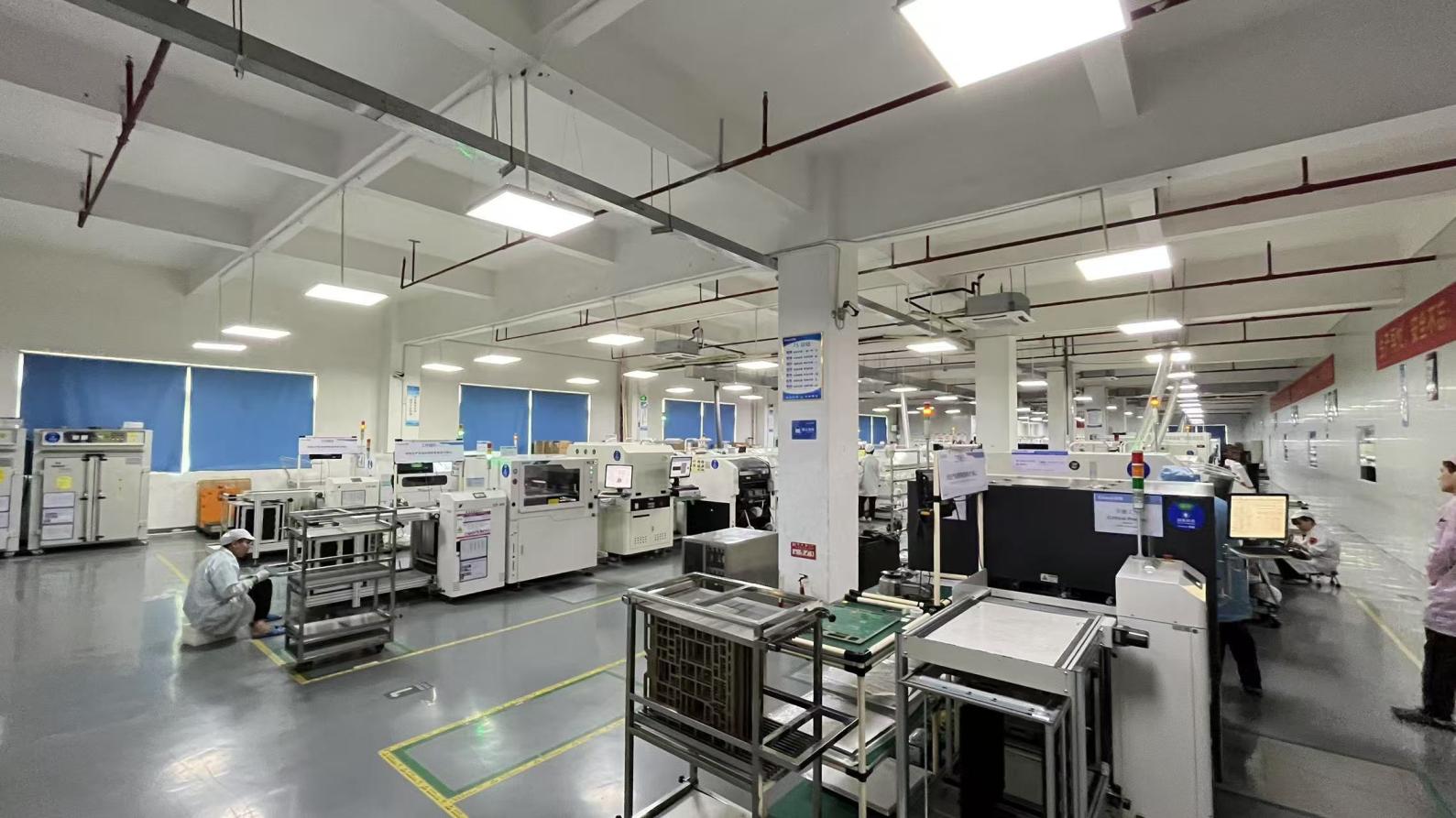
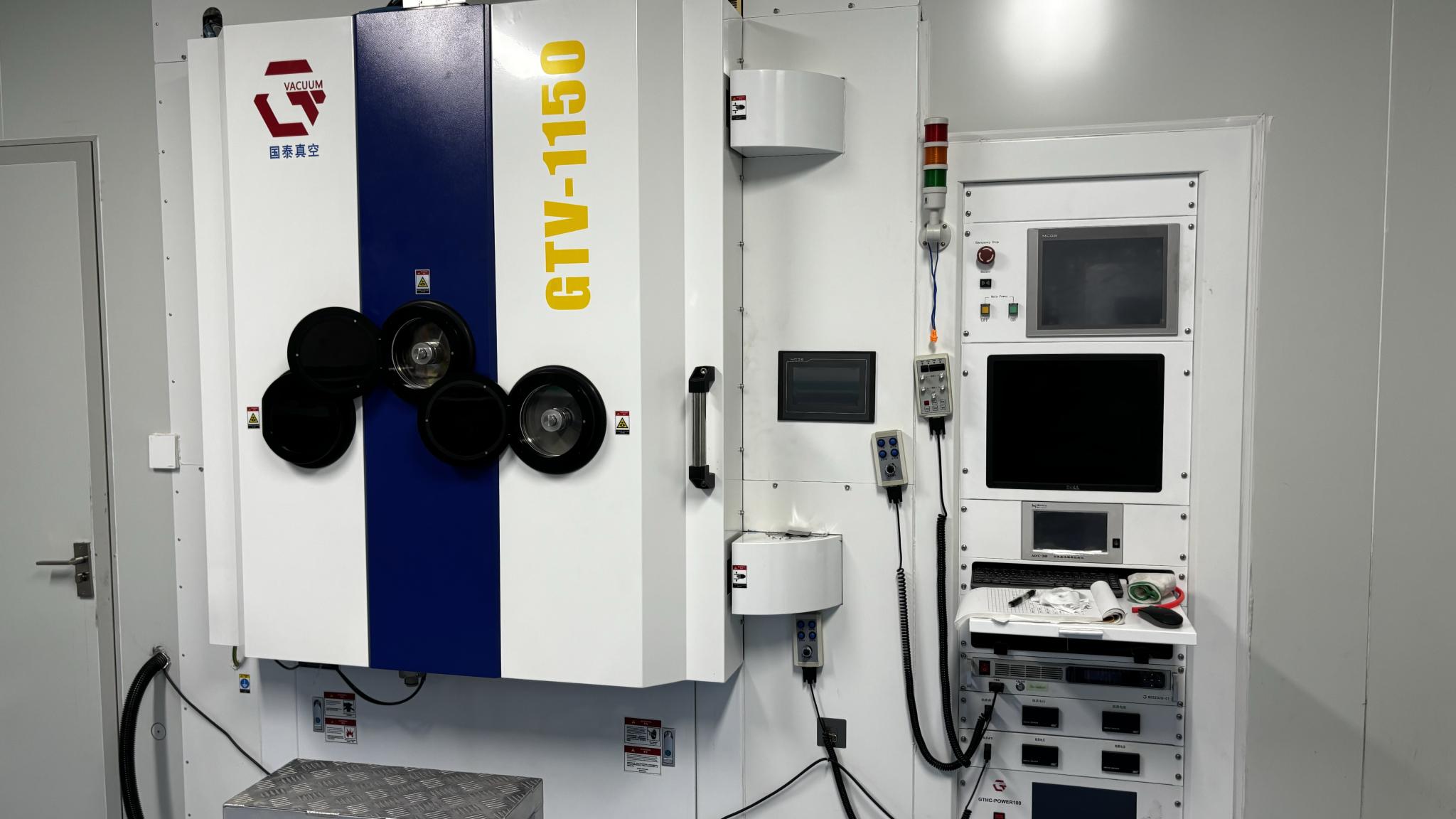
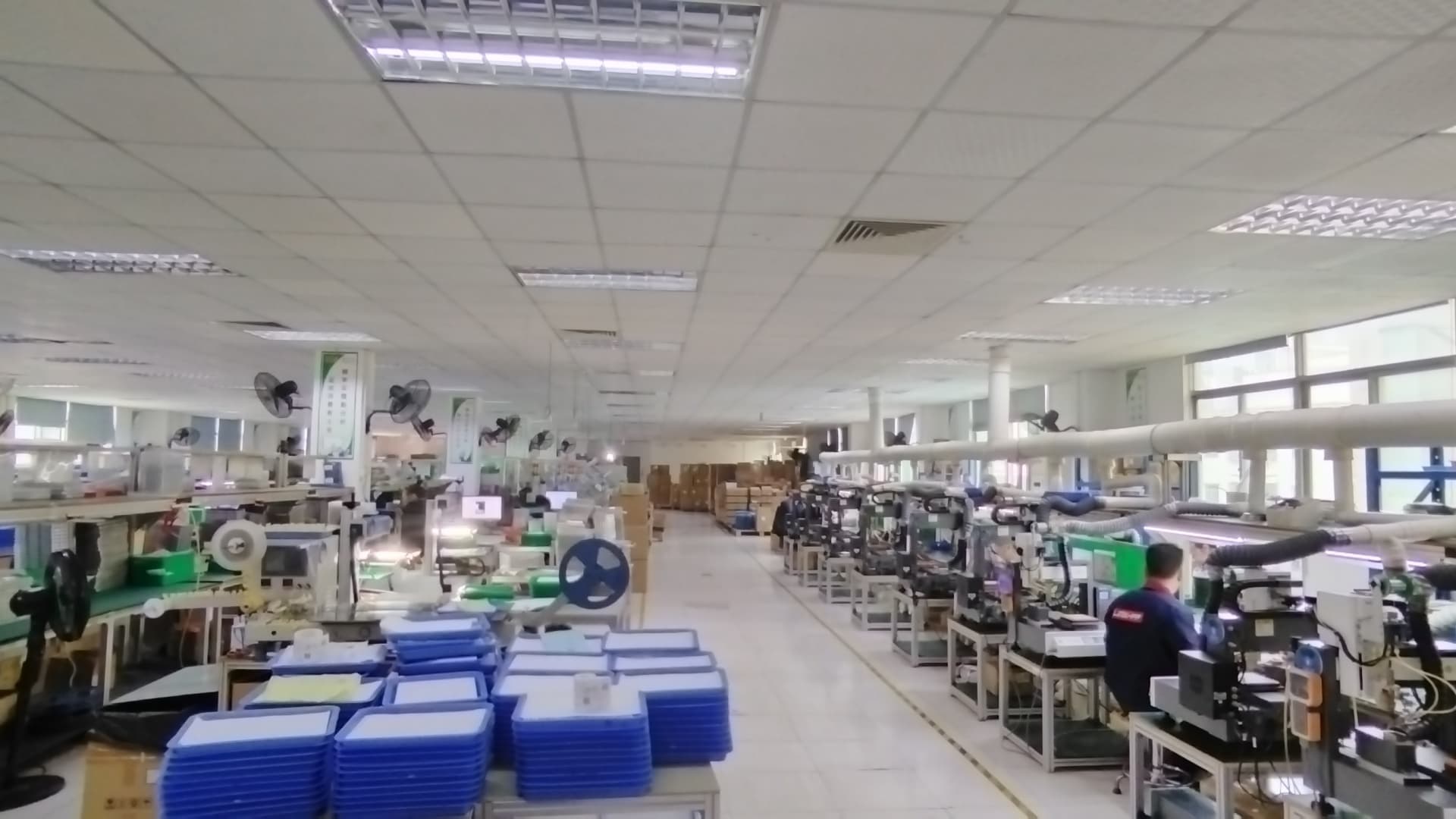
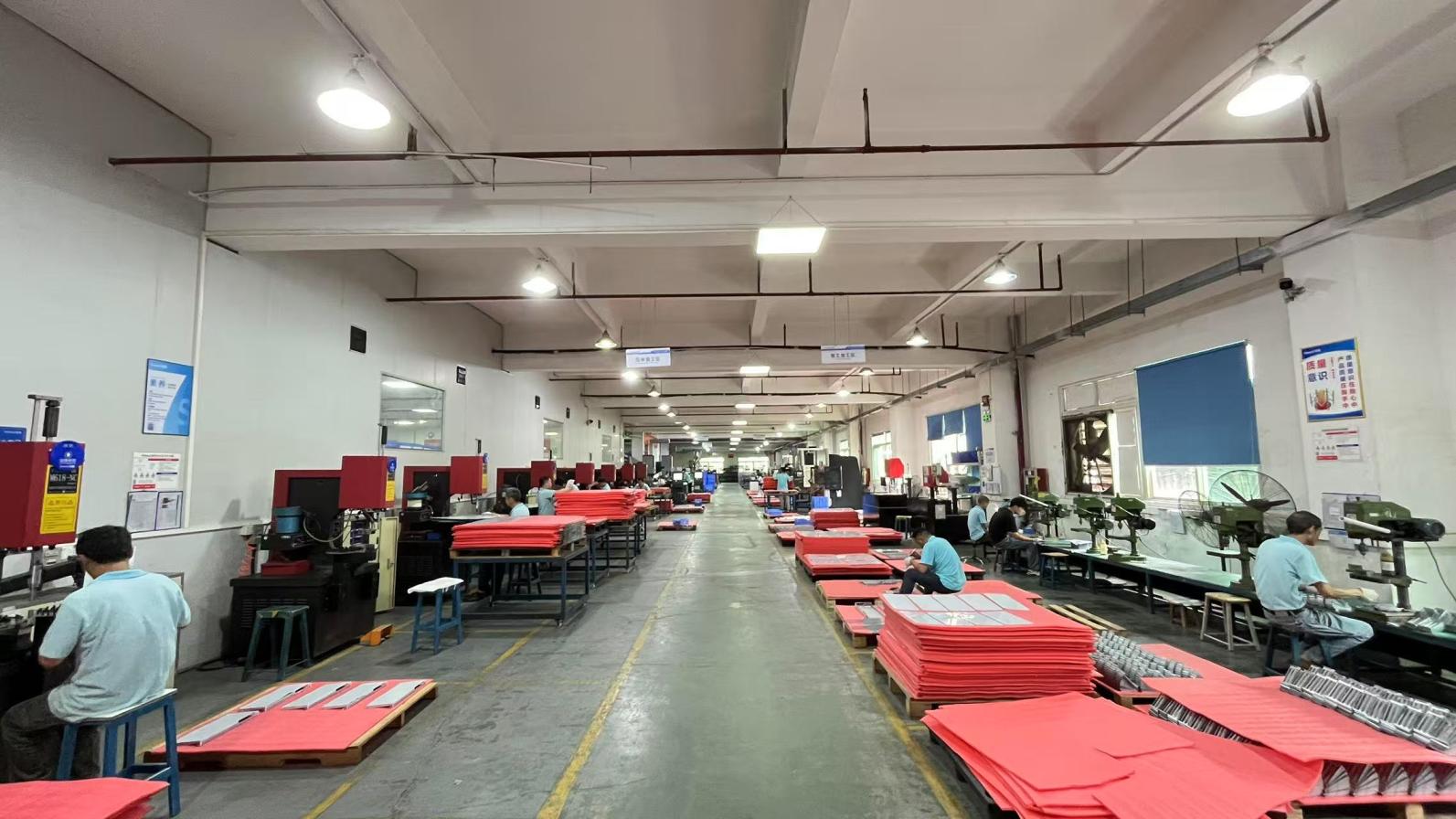
Founded in 2016, FiberNova Optical Communication Tech Co., Ltd. (FiberNovaTransceivers.com) is a professional optical component and transceiver hardware manufacturer. We operate a high-precision production facility covering approximately 380㎡, optimized for micro-assembly, mechanical validation, and optical-to-electrical signal testing.

Backed by 12 years of industry expertise and 6 years of export experience, we maintain a robust supply chain that enables us to deliver custom ODM/OEM solutions to customers in North America, Europe, Southeast Asia, and the Middle East, generating an annual export revenue of USD 8–15 million.

12+ Years
Industry Experience
Deep engineering expertise in high-frequency hardware
45+ QC Staff
Quality Inspectors
100% mechanical & signal integrity verification
65 Engineers
R&D Specialist Team
Supporting multi-vendor custom cage compatibility
1,200+
Supply Chain Partners
Ensuring raw material & component stability

Our quality management system is certified to ISO standards. To ensure physical alignment and reliable performance, every production run of 2xN SFP cages undergoes mechanical stress profiling, spring force verification, and dimensional conformance testing.

In the past year alone, our engineering team launched approximately 120 new products, adapting to high-frequency requirements like SFP28 and SFP56. We support custom projects including tailored lightpipe shapes, specialized EMI gaskets, and optimized pin lengths.
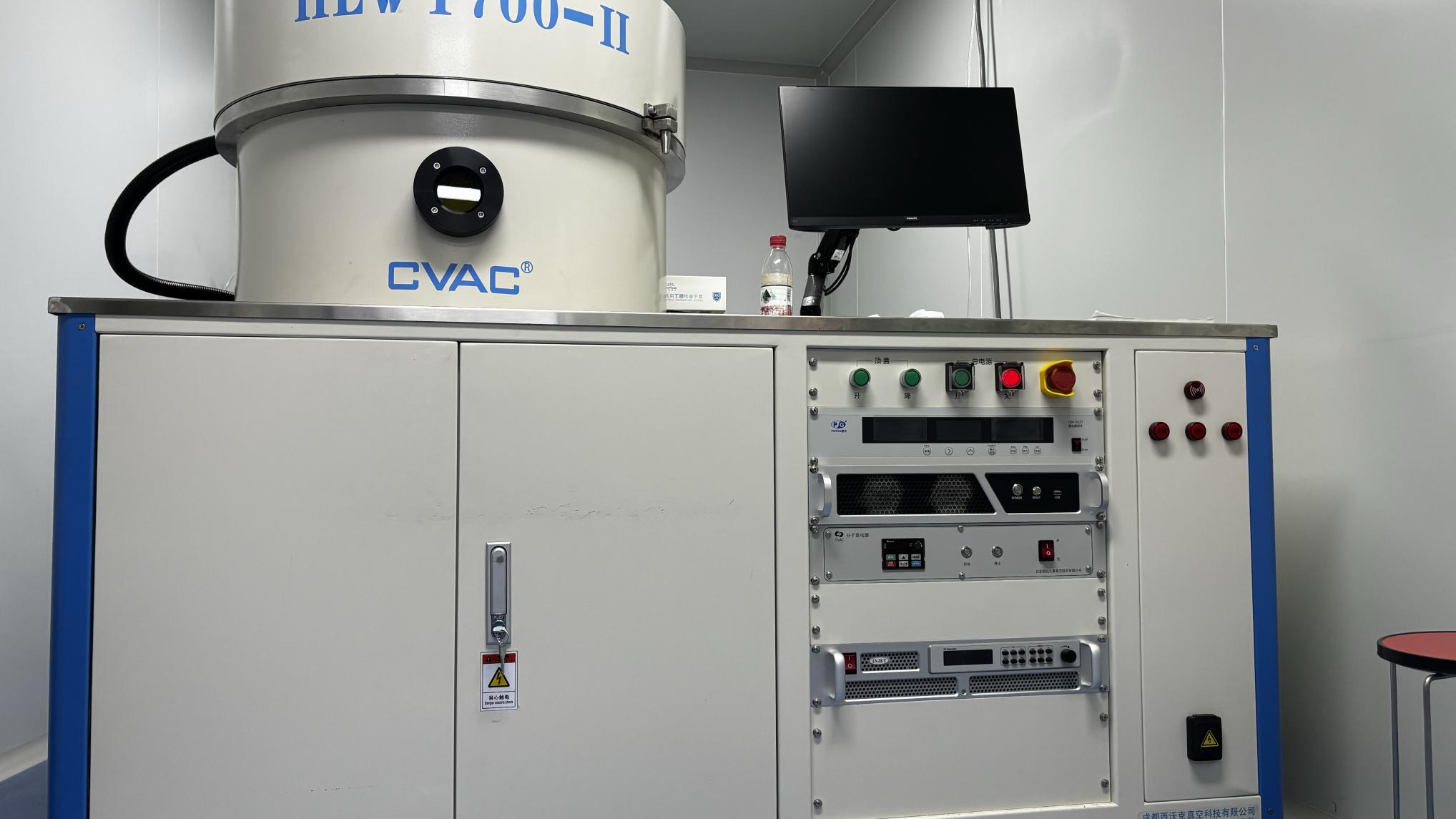
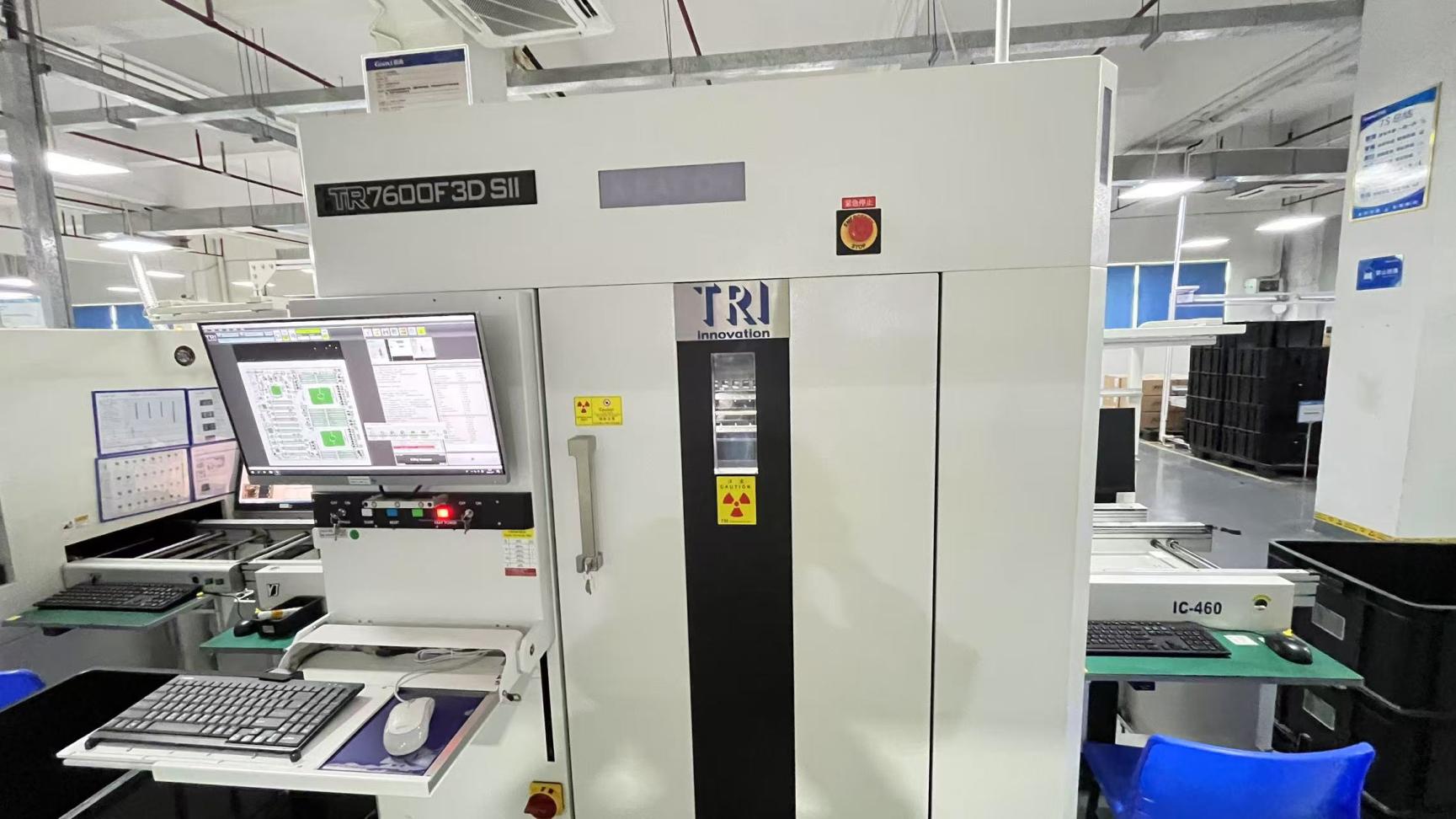
FiberNova Plant and Production Line Showcase

Sourcing 2xN Stacked SFP Cages from China: Industrial Ecosystem Benefits

China remains the leading hub for telecommunication hardware manufacturing. High-precision sheet metal stamping and automated connector assembly require integrated vertical ecosystems to control costs and maintain high quality.

Selecting a qualified Chinese partner like FiberNova provides significant advantages across your procurement cycle:

  1. Integrated Tooling and Stamping Ecosystems: Producing SFP cages requires precision metal forming with tolerance ranges within ±0.02mm. China's manufacturing clusters provide rapid tooling design and access to high-performance alloys like phosphor bronze and nickel silver.
  2. Cost Optimization through Advanced Automation: Automated manufacturing reduces manual assembly errors. By automating step-stamping, plastic overmolding, pin insertion, and packaging, we maintain high production yields and lower unit costs.
  3. Agile Customization (OEM/ODM): Thanks to direct access to CNC molding shops and plating vendors, we can design, model, and prototype custom variations of 2xN cages (e.g., custom lightpipes or pin footprints) within 15–20 working days.

Macro-Industrial Solutions & System Compatibility Guide

As switch bandwidth advances toward 25G, 100G, and 400G, physical port layout presents a system bottleneck. Using 2xN cages lets network operators double their port count per rack unit (RU), supporting up to 48 ports on a standard 1U switch front panel.

Cross-Vendor Compatibility Mapping

In global enterprise and telecom markets, multi-sourcing strategies are common. FiberNova designs our 2xN stacked SFP cages as direct replacements for major interconnect brands, matching physical footprints and electrical properties:
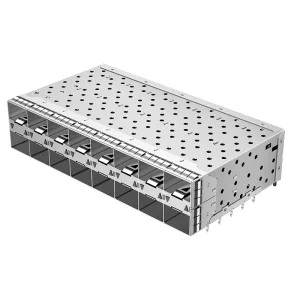
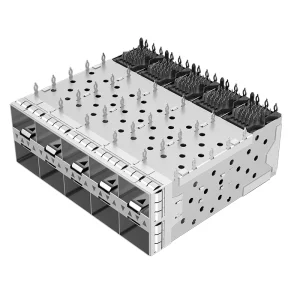
  • TE Connectivity Replacements: Direct drop-in solutions for standard parts (e.g., 2007562, 2180640, 2347721, and 2007394 series) with matching press-fit configurations and LED lightpipe alignments.
  • Pulse & Molex Alternatives: Footprint-compatible replacements for SFPP-3120-L and 754625001 series, maintaining consistent compliance pin locations for straightforward PCB integration.
  • SFF-8432 & SFF-8433 Compliance: All 2xN cages conform to MSA dimensional requirements, ensuring compatibility with all standard SFP/SFP+ optical modules, DAC copper cables, and active optical cables (AOC).

High-Performance 2xN Shielded Cages & Interconnects

TE Compatible Through Hole 320P Press-Fit 2x8 EMI Shielded SFP+ Cage With Light Pipe

2274867-6 TE Compatible Through Hole 320P Press-Fit 2x8 EMI Shielded SFP+ Cage With Light Pipe

View Details & Specifications
TE Compatible Through Hole 200P Press-Fit 2x5 EMI Shielded SFP+ Cage With Light Pipe

1-2132403-6 TE Compatible Through Hole 200P Press-Fit 2x5 EMI Shielded SFP+ Cage With Light Pipe

View Details & Specifications
TE Compatible Through Hole 160P Press-Fit 2x4 EMI Shielded SFP+ Cage With Light Pipe

2007399-6 TE Compatible Through Hole 160P Press-Fit 2x4 EMI Shielded SFP+ Cage With Light Pipe

View Details & Specifications
TE Compatible Through Hole 40P Press-Fit 2x1 EMI Shielded SFP+ Cage With Connector

2007538-8 TE Compatible Through Hole 40P Press-Fit 2x1 EMI Shielded SFP+ Cage With Connector

View Details & Specifications
Molex Compatible 2x1 Ports Through Hole 40P Press-Fit EMI Shielded SFP Cage With Connector

754625001 Molex Compatible 2x1 Ports Through Hole 40P Press-Fit EMI Shielded SFP Cage With Connector

View Details & Specifications
TE Replacement 2x1 Ports Through Hole Press-Fit 40P EMI Shielded ZSFP+ Cage With Connector

2198318-1 TE Replacement 2x1 Ports Through Hole Press-Fit 40P EMI Shielded ZSFP+ Cage With Connector

View Details & Specifications
TE Compatible Through Hole Press-Fit 152P 2x2 Ports EMI Shielded ZQSFP+ Cage With Lightpipe

2308171-1 TE Compatible Through Hole Press-Fit 152P 2x2 Ports EMI Shielded ZQSFP+ Cage With Lightpipe

View Details & Specifications
TE Compatible Through Hole 80P 2x2 Ports Press-Fit SFP+ Cage & Connector With Light Pipe

2007417-1 TE Compatible Through Hole 80P 2x2 Ports Press-Fit SFP+ Cage & Connector With Light Pipe

View Details & Specifications

Frequently Asked Questions & Technical Reference

Q

What are the primary benefits of 2xN stacked SFP cages over 1xN single-row designs?

Stacked 2xN structures double the port density on the faceplate by placing two rows of transceiver ports in the space of one. This allows system designers to configure high-density networks (like 48 ports in a 1U chassis) while utilizing a shared grounding path and reducing required PCB real estate.

Q

How do press-fit connections differ from traditional through-hole soldering?

Press-fit (compliant pin) systems establish mechanical, gas-tight connections with plated through-holes on the PCB without thermal heat cycles. This avoids the thermal stress and risk of solder bridges associated with wave soldering, simplifies PCB rework, and maintains cleaner signal transmission pathways for high-speed protocols.

Q

How is heat dissipation managed in dense 2x6 and 2x8 stacked cages?

Stacked cages limit standard air current across the module surface. To counteract this, our designs incorporate custom vent cutouts on the cage walls, support heat sink mounts on the top surface, and utilize low-profile lightpipes to maintain open, unobstructed airflow paths.

Q

Are FiberNova 2xN cages direct drop-in replacements for TE or Molex parts?

Yes. Our cages conform to the standard Multi-Source Agreement (MSA) footprint specifications, making them drop-in replacements for standard commercial designs (such as the 2007562 or 754625001 series) without requiring modifications to your PCB design.

Q

How does EMI shielding prevent crosstalk in high-speed optical transceivers?

By enclosing the connector interfaces inside a continuous, grounded Faraday cage, our metal spring fingers and EMI elastomeric gaskets block electromagnetic leakage. This keeps high-frequency signals contained within each channel, minimizing near-end crosstalk (NEXT) and protecting neighboring systems from interference.

All 2xN (Stacked Ports) Products